



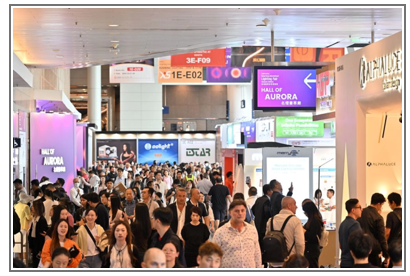
As cities transition toward smart urbanism and consumers demand sustainable, human-centric living spaces, the global illumination industry has anchored itself in Hong Kong this week. The 28th Hong Kong International Lighting Fair (Autumn Edition) and the concurrent 11th Hong Kong International Outdoor and Tech Light Expo opened their doors across two primary convention complexes, convening approximately 3,000 exhibitors from across the globe.
Organised by the Hong Kong Trade Development Council (HKTDC), the mega-scale twin trade showcase marks a key milestone on the global sourcing calendar. By spreading the event across both Victoria Harbour and Lantau Island—the Hong Kong Convention and Exhibition Centre (HKCEC) in Wan Chai hosting the Autumn Edition and AsiaWorld-Expo staging the Outdoor and Tech Light Expo—organisers have created a comprehensive, two-pronged gateway connecting manufacturers, urban planners, architects, and international procurement teams.
Dual Venues, Targeted Sectors
The strategic segregation of the twin fairs accommodates the distinct facets of modern illumination architecture: indoor consumer-and-commercial applications on one side, and industrial, infrastructural outdoor tech on the other.
The Hong Kong Convention and Exhibition Centre houses extensive zones dedicated to Commercial Lighting, LED Essentials, Residential Lighting, and Testing, Certification & Inspection services. At the centre of the HKCEC showcase is the Connected Lighting and smart systems ecosystem, reflecting a sharp pivot toward integrated automation, building management interoperability, and wellness-oriented designs. Simultaneously, AsiaWorld-Expo serves as the proving ground for heavy-duty, municipal, and architectural implementations. Its floor space is divided among specialized segments:

- Smart Poles & Public Lighting: Networked urban lighting infrastructure embedded with sensors, telecom relays, and environmental monitors.
- Industrial & High-Bay Lighting: Ruggedized, high-efficiency illumination for logistics hubs, aviation hangars, and manufacturing plants.
- Horticultural Lighting: Specialized spectrum solutions engineered to accelerate indoor farming yields and support urban vertical agriculture.
- Outdoor & Advertising Lighting: Architectural facade displays, landscape fixtures, and dynamic exterior illumination engineered to withstand extreme weather.
To ensure seamless transit for overseas delegations navigating both venues, organizers have deployed continuous shuttle operations connecting Wan Chai directly to AsiaWorld-Expo throughout the joint staging days.
Technological Pivots: Smart Connectivity and Human Wellbeing
Walking the exhibition floors reveals that simple lumen efficiency is no longer the primary competitive frontier. Instead, suppliers and design firms are demonstrating how artificial intelligence, IoT connectivity, and circadian science have transformed lighting from a passive utility into an active environmental system.
Among domestic and international brands, smart control modules dominate the displays. Exhibitors like mainland high-tech enterprise Yndlux Lighting are showcasing independently developed multi-link linear module systems capable of autonomous adjustment based on daylight harvesting and occupancy metrics. In the industrial realm, fixtures such as the Red Dot-recognized UFO High Bay line demonstrate how precision optics can combine power factor tuning and correlated colour temperature (CCT) controls into a single modular enclosure.
Equally prominent is the emergence of human-centric lighting, tailored particularly to healthcare and aging demographics. Multiple exhibitors have unveiled circadian-aligned ceiling panels and ambient arrays engineered for elder-care facilities and residences. These fixtures adjust spectrum ratios dynamically throughout the day, mitigating blue-light suppression of melatonin in the evenings, improving visual clarity for older eyes, and easing circadian rhythm disruptions.
Thought Leadership and Urban Infrastructure
Beyond the trade stands, the twin fairs serve as an international symposium for lighting engineering and architectural design. Across multiple dedicated presentation spaces—including “the STAGE” at HKCEC and AsiaWorld-Expo—plenary sessions bring together urban planners, structural engineers, and design luminaries.
A major theme throughout the conference tracks is the rapid adoption of artificial intelligence in public lighting. Industry panels featuring the Alliance of Smart Pole Industry and telecommunications infrastructure partners explored how municipalities are converting standard streetlight grids into multi-functional digital backbones. These “smart poles” increasingly double as 5G microcell hosts, vehicle-to-infrastructure (V2I) sensors, and weather-monitoring stations capable of transmitting real-time flood or air-quality telemetry to municipal emergency dashboards.
Parallel forums—including the Connected Lighting Forum co-organized with the Shanghai Pudong Intelligent Lighting Association (SILA)—centered on light healing, psychological wellbeing, and the therapeutic applications of dynamic spectrum control in workspace environments. Global designers also examined the role of sustainable procurement, emphasizing circular design paradigms where fixtures are built entirely from recycled alloys, disassembled with standard tools, and upgraded via modular drivers rather than discarded at end of life.
The EXHIBITION+ Hybrid Model
Recognizing the evolving nature of post-pandemic global procurement, the fairs are deployed under the HKTDC’s “EXHIBITION+” hybrid model. While the physical exhibition halls buzz with live demonstrations, an AI-powered smart business-matching platform, Click2Match, operates continuously for three weeks.
The digital integration extends directly onto the physical show floors via the HKTDC Marketplace App’s Scan2Match capability. Onsite buyers use the tool to scan exhibitor-specific QR codes, instantly cataloguing product specifications, technical sheets, and interactive floor plans to their personal devices. This eliminates the need for heavy physical catalogues while enabling buyers to maintain direct sourcing dialogues and schedule virtual meetings long after the physical booths are dismantled.
Hong Kong’s Role as a Green Technology Springboard
The 2026 edition of the twin lighting fairs carries added significance as the HKTDC marks its 60th anniversary as Hong Kong’s statutory trade promotion body. Staged concurrently with the Eco Expo Asia exhibition at AsiaWorld-Expo, the cluster of events underscores the city’s positioning as a premier green-tech finance and export gateway.
By linking mainland manufacturing powerhouses with buyers from ASEAN, Europe, the Middle East, and the Americas, the twin lighting fairs highlight how the convergence of sustainability regulations, microelectronics, and architectural aesthetics continues to reshape the built environment. With smart connectivity and ecological efficiency now serving as baseline requirements rather than luxury upgrades, the deals forged across Wan Chai and Lantau this week are set to illuminate public spaces and commercial properties worldwide for years to come.