







Govee is exploring this connection between technology and design through a collaboration with interior designers Gemma Mahabeer-Goldsmith and Melanie Lissack. Rather than presenting smart lighting simply as a connected-home feature, the collaboration looks at how intelligent luminaires can become part of the interior itself.
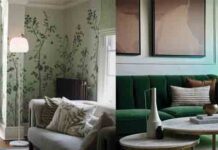
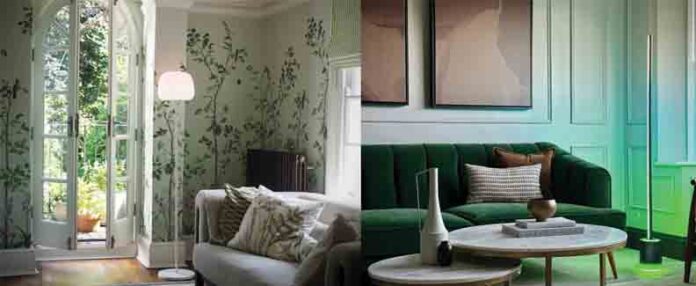
The designers have worked with Govee’s Floor Lamp 3 and Lantern Floor Lamp, using the products in different interior settings. The exercise highlights a simple idea: smart lighting does not necessarily need to stand out as technology. It can complement furniture, colours, textures and architectural elements while quietly changing the mood of a room.
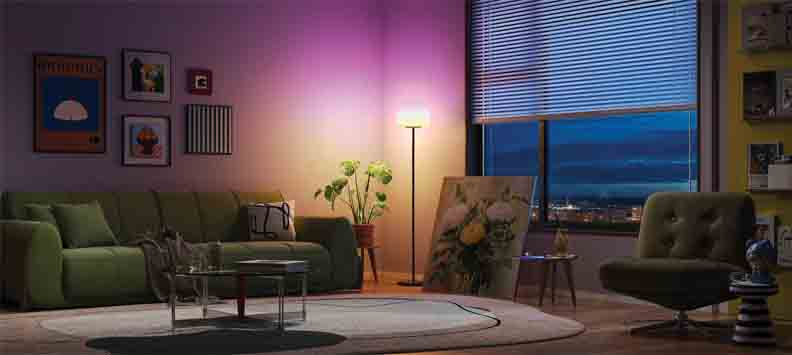
That is an important shift for the residential lighting market. Connected lighting has traditionally been strongly associated with colour-changing effects, voice assistants and entertainment. Those features remain relevant, but the design conversation is becoming broader. Homeowners increasingly want lighting that feels considered and belongs naturally within the space.

Govee’s Floor Lamp 3 reflects this approach through layered illumination and adjustable lighting effects. Instead of relying on a single source to light an entire room, the lamp can contribute to different lighting levels and create visual depth. This becomes particularly useful in living spaces where the same room may be used for work, conversation, reading or relaxation.
The Lantern Floor Lamp takes a more decorative approach. Its form allows it to function as part of the room’s visual composition, while its Halo Gradient Lighting creates a softer atmospheric effect. In this context, the luminaire is not simply something that illuminates the furniture around it. It becomes one of the objects shaping the room.
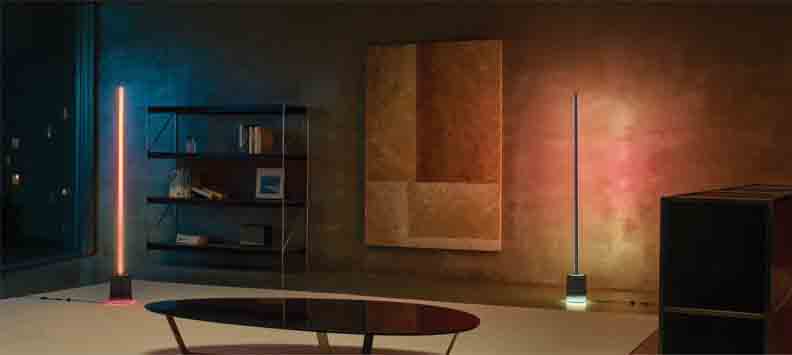
This is where smart technology starts to become interesting for interior designers. The ability to adjust brightness, colour and lighting scenes means that a single installation can support several different experiences. Morning light can be kept subtle, brighter illumination can be introduced when required, and warmer or more expressive settings can transform the same space later in the evening.
For designers, that flexibility adds another layer to the creative process. Lighting can respond to the mood they want to establish rather than remaining fixed after installation.
Govee Product Manager Jerry Lin has described the company’s approach around giving users greater freedom while keeping the experience intuitive and personal. That balance is becoming increasingly important as smart-home technology enters spaces where aesthetics matter as much as functionality.
The collaboration also reflects a wider change in the lighting industry. Connected products are becoming less about adding technology for its own sake and more about giving people control over how they experience their surroundings.
Govee has been developing smart lighting products since 2017, building a portfolio that combines connected controls with decorative and functional lighting. Its latest collaboration with interior designers places that technology within a design-led context, showing how smart products can work alongside established principles of colour, proportion, texture and ambience.
The result is a different way of looking at residential lighting. A smart luminaire does not have to announce itself through a screen, an app or a dramatic colour effect. Sometimes its greatest value is simply the ability to make a familiar room feel different.
As connected lighting becomes increasingly integrated into homes, the boundary between lighting technology and interior design is likely to become less obvious. The future may not be about choosing between beautiful interiors and smart technology. It may be about designing spaces where the two are considered together from the beginning.