




Lighting is not decoration. It is an invisible architecture that defines how a space is experienced long before its details are noticed.
A well designed lighting scheme does not announce itself. It quietly guides movement, enhances form, reveals texture, and supports the purpose of the space. When done right, people rarely say, “What beautiful lighting.” Instead, they say, “This space feels right.”
Lighting as a Spatial Language
Every space speaks a language. Architecture provides the grammar, interiors supply the vocabulary, and lighting sets the tone and emphasis. As lighting designers, our role is to translate intention into illumination. We ask questions that go beyond lumens and fixtures: What is the story of this space? Who will use it? At what times of day? For how long? In what emotional state?

Lighting determines how volumes are perceived whether a ceiling feels expansive or oppressive, whether a corridor feels inviting or intimidating, whether a façade appears monumental or approachable. Through contrast, hierarchy, and rhythm, light establishes spatial clarity. Without this clarity, even the most beautifully designed spaces can feel confusing or uncomfortable.
Beyond Fixtures
One of the most common misconceptions about lighting design is that it is about selecting fixtures. Fixtures are tools, not solutions. The real design lies in deciding *where* light should exist, *where it should not*, and *how it transitions between the two*.
A lighting designer works with layers: ambient lighting for overall comfort, task lighting for function, accent lighting for focus, and decorative lighting for identity. These layers must work together seamlessly, responding to both architecture and human use. Overlighting is as damaging as underlighting. Excessive uniform brightness flattens spaces, erases depth, and causes visual fatigue.
Good lighting design embraces shadow as much as illumination. Shadow gives form meaning. It allows surfaces to breathe and materials to reveal their true character.
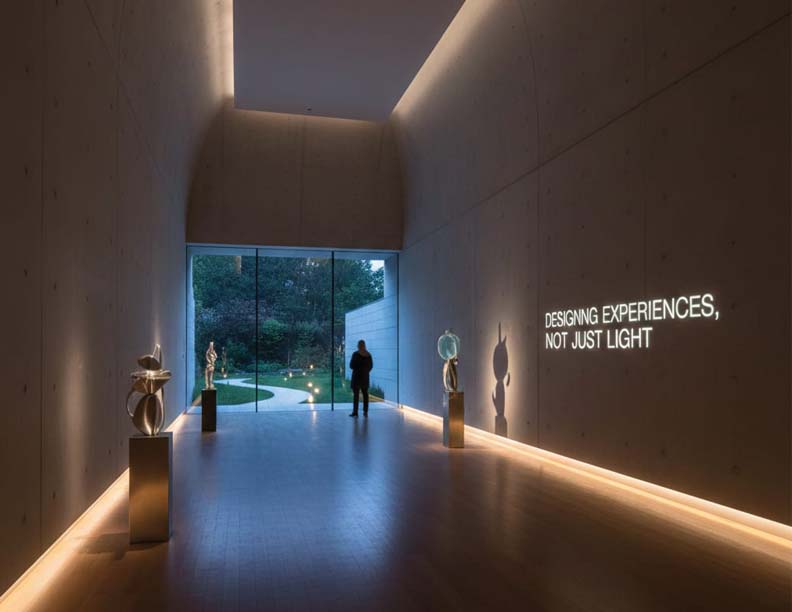
Human Centric Lighting: Designing for People, Not Plans
Lighting is experienced by people, not drawings. A technically correct lighting layout can still fail if it ignores human perception. Factors such as glare, contrast ratios, colour temperature, and vertical illumination directly affect comfort, productivity, and mood.
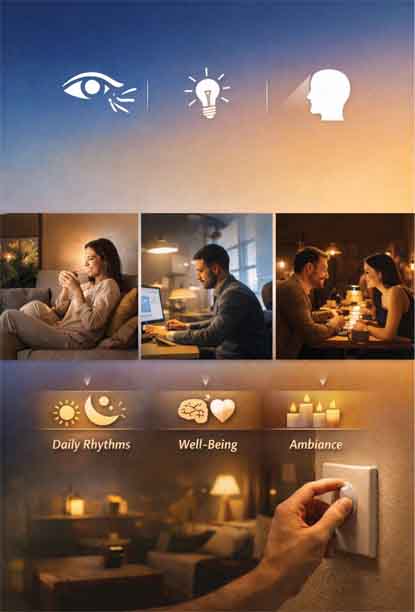
In residential spaces, lighting must adapt to daily rituals waking, relaxing, entertaining, resting. In workplaces, it influences focus, alertness, and wellbeing. In hospitality environments, lighting orchestrates emotion, guiding guests from public vibrancy to private calm.
Human centric lighting is not about complexity or expensive technology. It is about empathy understanding how light supports the body’s natural rhythms and psychological needs. Sometimes, the most impactful design decision is simply reducing light where it is unnecessary.
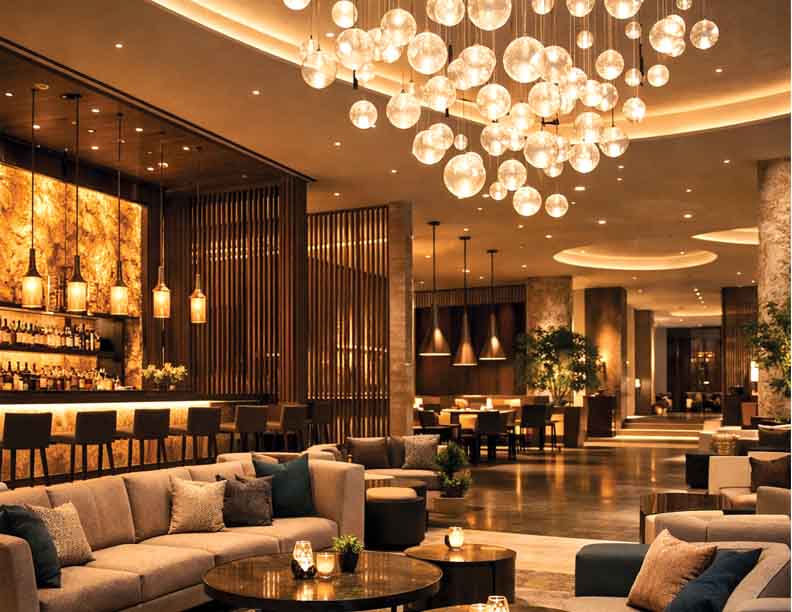
Daylight: The Primary Design Partner
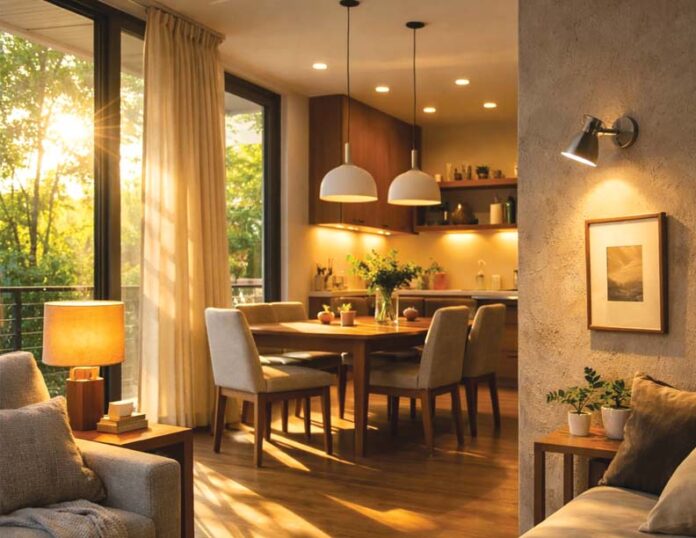
Artificial lighting should never compete with daylight; it should collaborate with it. A lighting designer studies how natural light enters a space, how it moves throughout the day, and how it changes across seasons. This understanding informs fixture placement, circuiting, and control strategies.
Daylight brings variability, contrast, and life to interiors. Artificial lighting must respond sensitively, filling in gaps rather than overpowering natural conditions. Intelligent integration of daylight reduces energy consumption while enhancing spatial quality.
When daylight is respected, lighting design becomes sustainable by default not as an afterthought, but as a fundamental design principle.
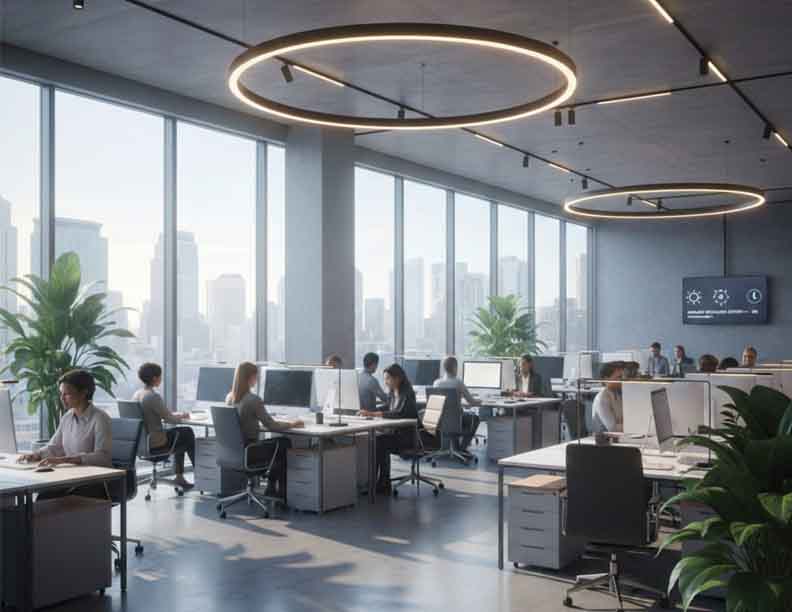
Lighting Controls: The Silent Enabler
A beautifully designed lighting scheme can fail if it is poorly controlled. Controls determine how flexible, intuitive, and usable a lighting system is. From simple dimmers to advanced scene setting systems, the goal is always the same: to give users control without complexity.
Lighting designers advocate for fewer, well considered scenes rather than endless options. A space should transition effortlessly from day to evening, from work mode to relaxation, from public to private. Good controls disappear into the background, empowering users without overwhelming them.
Architecture, Materiality, and Light
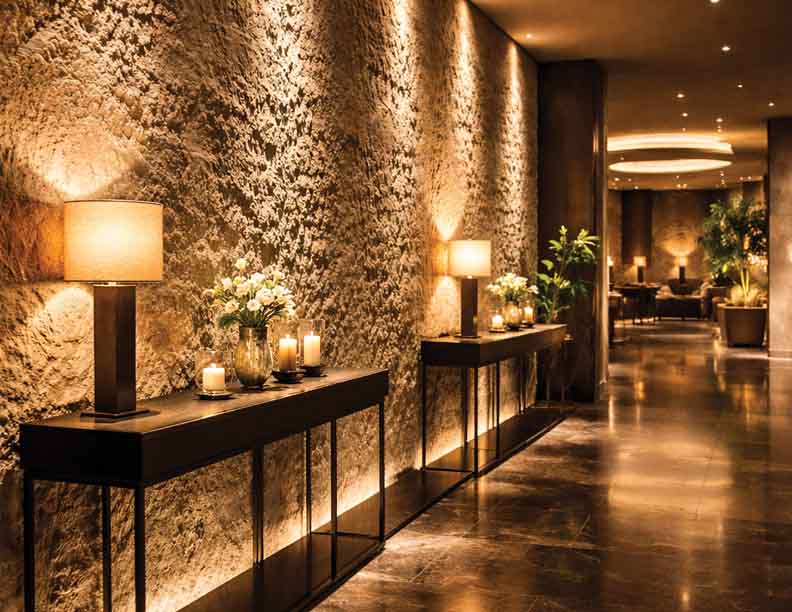
Materials respond dramatically to light. Stone absorbs, metal reflects, wood warms, glass transforms. A lighting designer studies material samples under real lighting conditions, not just in catalogues or showrooms.
Texture becomes visible only through grazing light. Colour shifts under different colour temperatures. Gloss levels influence glare and reflection. By understanding these interactions, lighting designers help architects and interior designers make informed material choices that perform as intended.
In façade lighting, the relationship between light and material defines a building’s nighttime identity. Subtlety often creates more impact than brightness. The aim is not to flood a structure with light, but to reveal its architectural intent.
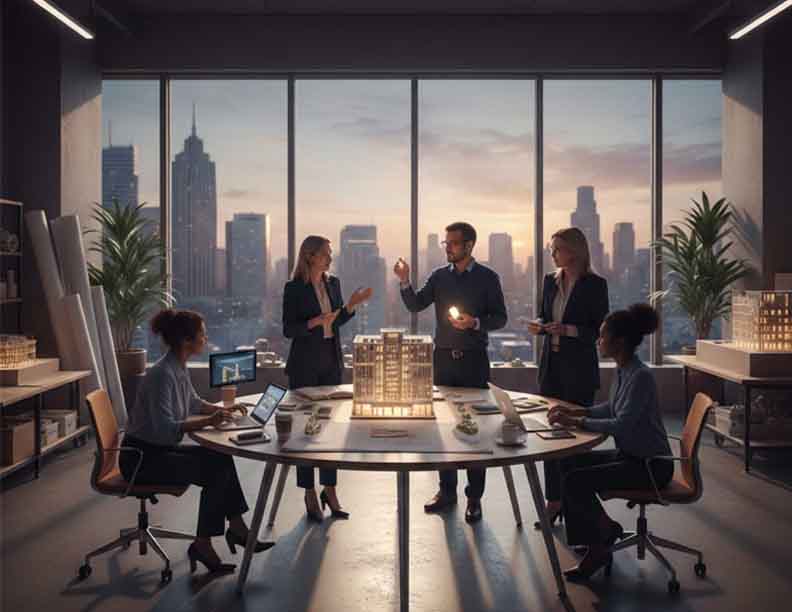
The Cost Myth
Lighting design is frequently seen as an added cost rather than a value driver. In reality, early involvement of a lighting designer often reduces overall project costs. Thoughtful design avoids excessive fixtures, inefficient layouts, and expensive post installation corrections.
Well designed lighting extends the life of interiors, reduces energy consumption, and minimizes maintenance issues. More importantly, it elevates user experience something that cannot be quantified purely in monetary terms.
In commercial and hospitality projects, lighting directly influences brand perception, dwell time, and repeat visits. In residential spaces, it shapes daily comfort and long term satisfaction. These outcomes far outweigh the initial investment.
Collaboration: The Heart of Good Lighting Design
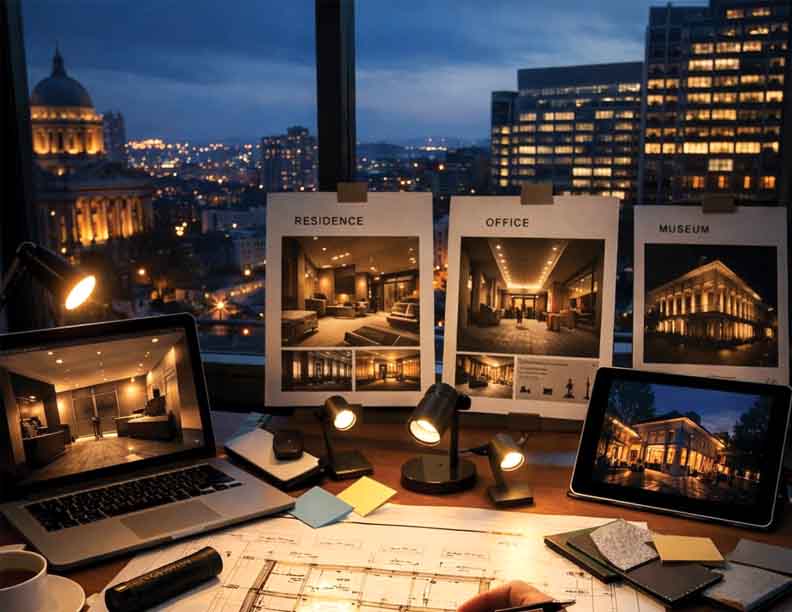
Lighting design does not exist in isolation. It thrives on collaboration with architects, interior designers, landscape designers, engineers, and clients. Early dialogue ensures alignment between vision and execution.
When lighting designers are brought in late, they are often forced to compromise working around fixed ceilings, limited coordination, or predefined budgets. When involved from the conceptual stage, lighting becomes integral rather than corrective.
The most successful projects are those where lighting is discussed alongside form, function, and flow not after them.
The Invisible Signature
Unlike other design disciplines, lighting design leaves no physical trace during the day. Its presence is felt most strongly when it is absent or poorly executed. This invisibility is both its challenge and its power.
A lighting designer’s signature is not a particular fixture or style, but a consistent sensitivity to context. Each project demands a unique response. What works for a luxury residence may fail in a workplace. What suits a heritage building may be inappropriate for a contemporary façade.
Lighting design is ultimately about restraint knowing when to intervene and when to step back.
Conclusion
Lighting design is the art and science of shaping experiences. It operates at the intersection of technology, perception, and human behaviour quietly influencing how spaces are understood, how emotions unfold, and how architecture reveals its intent. Long before a material is touched or a form is consciously admired, light establishes first impressions and lasting memories.
From a lighting designer’s perspective, success is not measured by lux levels, fixture counts, or the latest technology, but by how a space feels over time. Comfort, visual clarity, and emotional balance become the true benchmarks of good design. A well lit space allows people to focus without strain, move intuitively, and connect effortlessly with their surroundings.
When lighting is thoughtfully designed, it transcends trends. It adapts to changing needs, supports multiple functions, and ages gracefully alongside the architecture it serves. It does not seek attention, yet it elevates everything within its reach materials appear richer, spaces feel more intentional, and transitions become seamless.
Ultimately, the true power of lighting lies in its restraint. The most successful lighting schemes are often invisible, sensed rather than seen. They do not compete with architecture or interiors; they complete them. And in fulfilling this quiet role, lighting achieves its highest purpose not to be noticed, but to enhance how we see, experience, and inhabit space.

Sandeip Anand (M.A Lighting Design Germany) is the Director at AIMS Lighting Design, Mumbai having professional lighting experience of more than 20 years.