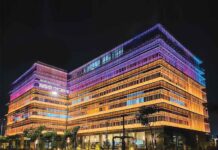







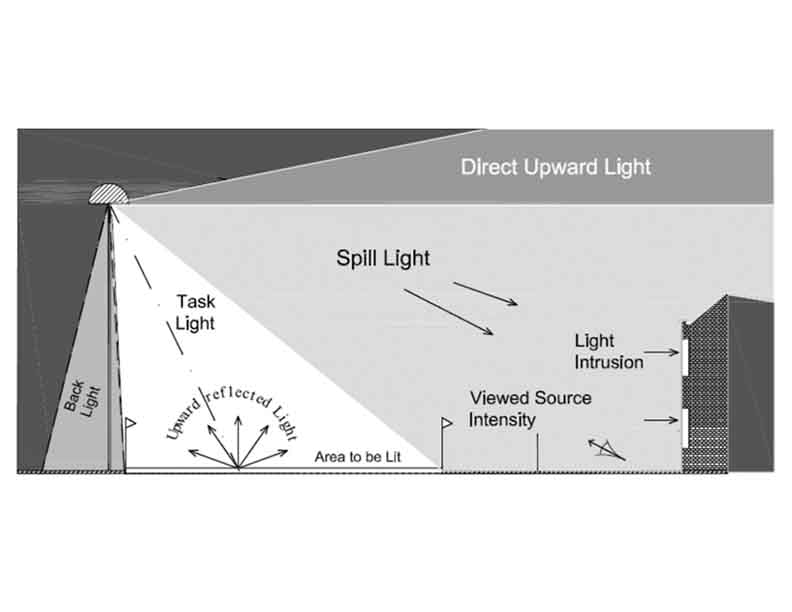
IS 1944 Standard for Code of Practice for Road and Tunnel Lighting Second Revision (Under Rev now) recommends adequate illumination to enhance safety by improving visibility for drivers and pedestrians, while minimizing energy waste, glare control and light pollution or sky glow (Direct upward light). Additionally, road lighting contributes to a sense of security and can improve the overall aesthetics.
IS1944 addresses parameters like light intensity – Luminance/Illuminance, uniformity, glare control and so on depending upon the road classifications. Choosing the ideal colour temperature for street lighting is a complex decision that must balance functional requirements with community comfort. While designing, the experts consider the purpose of the lighting, energy efficiency, regulatory standards, and urban development trends by understanding the interplay among CCT Kelvin, lumens per watt, and CRI.
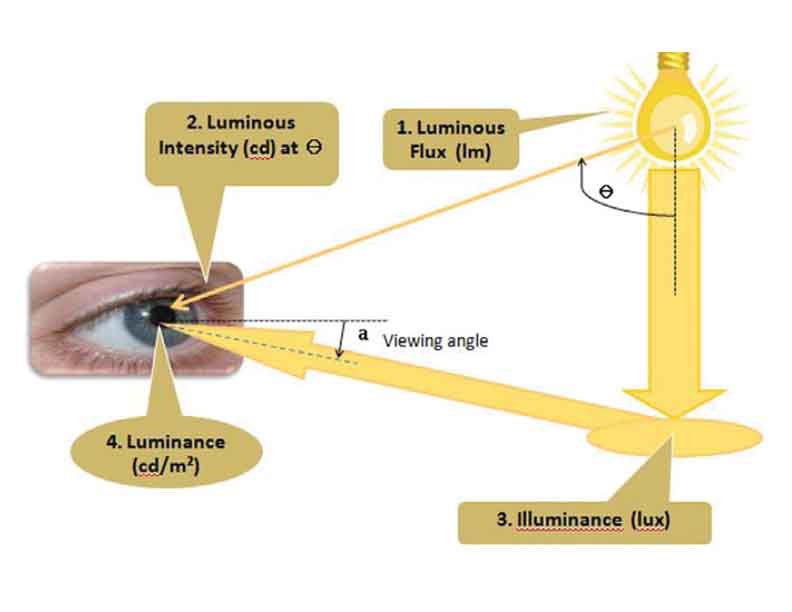
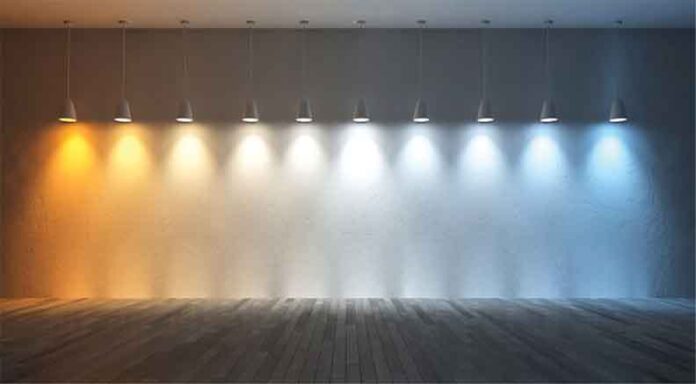
White LEDs are characterized by several colour metrics, primarily correlated colour temperature (CCT) measured in Kelvin (K), colour rendering index (CRI)-now Rf as per CIE & ANSI TM 30, and colour difference (SDCM). CCT indicates the perceived warmth or coolness of the light, ranging from warm (2700K-3000K) to cool (5000K-6500K). CRI ( Rf) quantifies how accurately a light source renders colours compared to a reference light source. SDCM, also known as MacAdam ellipses, measures the perceived colour difference between LEDs, indicating how closely they match in colour. Similarly, luminous efficacy (how much light output for a given power input) and spectral power distribution (the distribution of light across different wavelengths) are relevant for evaluating white LEDs.

Out of all above parameters, we are going to discuss here correlated colour temperature (CCT) and why lower CCT LEDs for Road Lighting Application.
Understanding CCT
Colour temperature refers to the warmth or coolness of light emitted by a source, measured in Kelvins (K). It indicates the colour appearance of the light source, with lower Kelvins representing warmer, yellow tones and higher Kelvins indicating cooler, bluish tones.
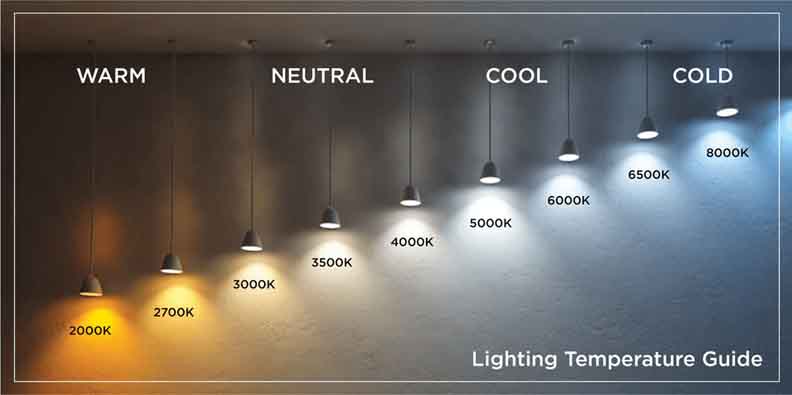
Standard Preference of CCT for Street Lighting
Selection criteria of LED CCT begins with a belief that Higher Kelvin Means Brighter Light or it is more efficient and because of hotter climate in general In India, more as Preference. Now , let us analyse, understand and find the truth as on date.
- Perceived Brightness: While not directly related, CCT can affect how bright a light source is perceived to be. Cooler colour (higher Kelvin) temperatures often appear brighter than warmer colour temperatures (lower Kelvin), even if the lumen output is the same.
- Preferences & Habits: During the Legacy Lamp era Street lighting was done with metal halide (4000K) and sodium vapor lamps (very warm white, 2000K – 2200K ) for years. However, when LED technology first came out, it was with blue rich cool white colour temperature, but it could resolve the issue of energy consumption because of higher efficiency. This new environment, which is unusually white and contains a lot of blue, was not liked by many city dwellers but continued as preferred light CCT.
- Efficacy (LPW): Technically speaking the transition from older lamps with low colour rendering (CRI 25) to LEDs with colour rendering of at least CRI 70 and CRI 80 has actually given a huge advantage in choosing colours (CCT).
Generally, LEDs with higher CCT (like 6500K) tend to have slightly higher lumen output compared to those with lower CCTs (like 3000K), but with the present LED technology it is possible to achieve more or less same efficacy within the same LED series and package size for application specific LEDs.
For example, in Street Lighting application, from the Data Sheet of CREE J Series 1W, 70 CRI 5050 LEDs, one can find that at 85 Deg C . L/W is 204@6500K, 207@5700K, 207@4000K,199@3500K, and 197@3000K. Similarly, one can get such an information from Datasheet of Luxeon LED 5050 HE Series. In conclusion one can say that Efficacy (LPW) is not the obstacle in selecting lower CCT for Street Lighting.
Mesopic Vision for Road Lighting vs S/P ratio
As seen from the fig. Mesopic Vision or twilight vision takes place in in the luminance range 0.034 cd/m2 and 3.4 cd/m2 – the low light levels typical of night time road lighting. Here the S/P ratio (Scotopic/Photopic ratio) and correlated colour temperature (CCT) of LED lighting play significant roles in visual performance. A higher S/P ratio, indicating a stronger contribution from rods (scotopic vision), generally leads to better visibility, especially in terms of perceived brightness and reaction time.
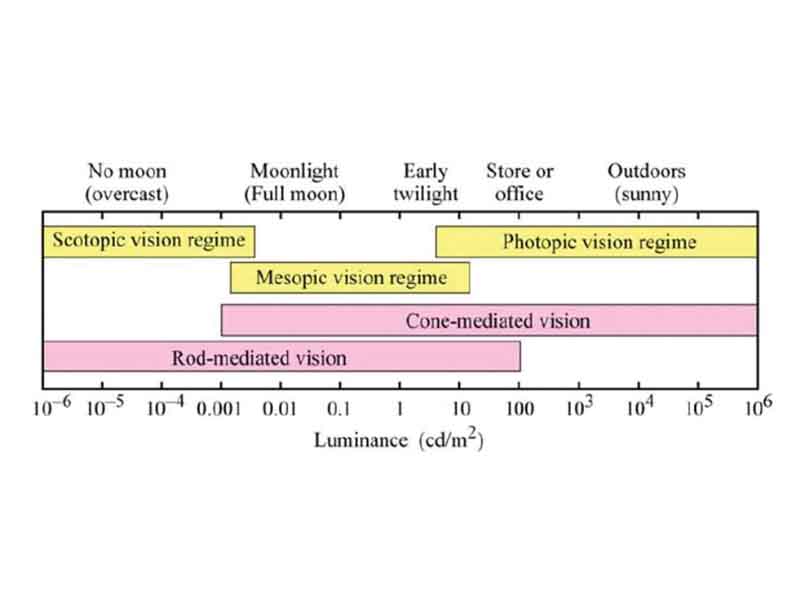
While higher CCT (cooler, bluer light) tends to increase the S/P ratio and mesopic luminance, but is true when Luminance Level is 1cd/m2 or lower as explained in CIE 191: 2010 Recommended System for Mesopic Photometry. Based on Visual Performance. Such lighting levels are recommended for Residential area where lower CCT is preferred for Comfort and Aesthetics.
- High CCT Not necessarily Better Visibility: While high CCT LEDs can offer higher visibility under mesopic vision, they are less effective in fog or haze or smog, due to two types of light scattering that occur when shorter wavelengths (blue) light interacts with particles in the atmosphere (Rayleigh and Mie scattering). Yellow light, with better fog penetration, is more effective in such conditions.
- White Light Generation: White light from LEDs is typically generated by using a blue LED with a phosphor coating, such as Yttrium Aluminum Garnet (YAG). This combination allows tuning of the white light colour to suit different lighting applications.
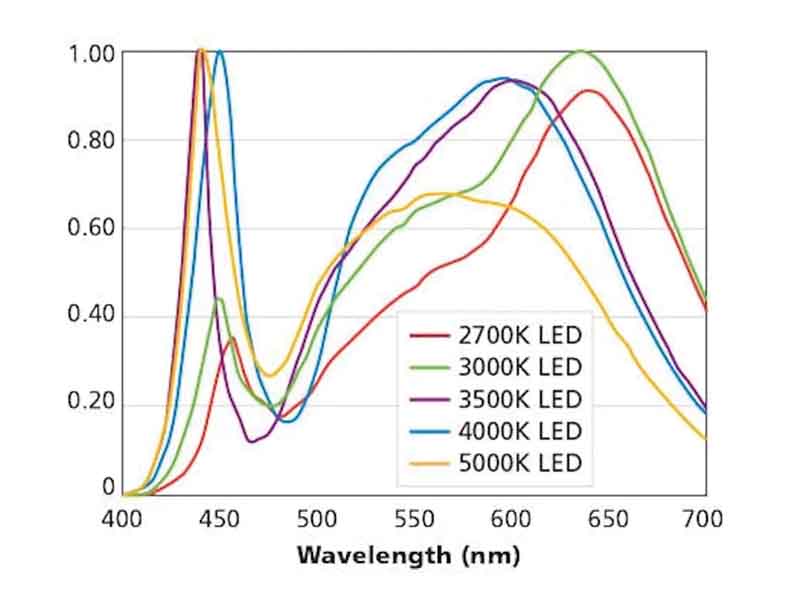
- Blue Light Hazard: High-intensity with higher CCT LED street lights emit substantial blue light, which can cause glare, photochemically induced retinal injury,etc.. Blue-rich LED lighting can decrease visual acuity and safety, potentially creating road hazards.
- Glare: High CCT (Correlated Colour Temperature) LED road lighting can lead to increased glare, which can negatively impact driver visibility and potentially increase accident risks.
- Dark Adaptation: Efficient dark adaptation (the process by which the eye recovers its sensitivity to low light after being exposed to bright light) is crucial for night time driving safety. Warm white LEDs, with lower CCT, offer shorter dark adaptation times compared to cool white LEDs, making them more suitable for roadway and tunnel lighting.
- Physiological Impact: High-intensity LED lights, particularly those with a strong blue light component, suppress melatonin, a hormone crucial for regulating sleep and other physiological functions. LED Streetlights with higher CCT are significantly more potent in influencing circadian rhythms.
Artificial light at night (ALAN) vs Light Pollution & Environmental Efect
ALAN has largely increased overtime due to industrialisation, urbanisation and population growth. Artificial lighting at Night ( ALAN) can cause light pollution, which is recognised as one of the most complex environmental degradation forms of the 21st century.
It can have adverse effects on people, astronomy and wildlife health, and results in inefficient use of energy and other environmental harm (e.g. carbon dioxide emissions, global warming), crime and disorder.
Fig.4 Guidance Notes for the Reduction of Obtrusive Light; 2020 (ILP) UK, where Sky glow (Direct upward light) refers to the brightening of the sky above towns caused by direct or reflected upward light.
It disrupts nocturnal animal behaviour, including mammals, birds, amphibians, fish, and insects. It also disrupts the circadian rhythms of humans, animals, and plants; and it has even been implicated in the global obesity epidemic – light pollution may be making us fat. The death of migrating birds by crashing into high plazas are examples due to high sky glow.
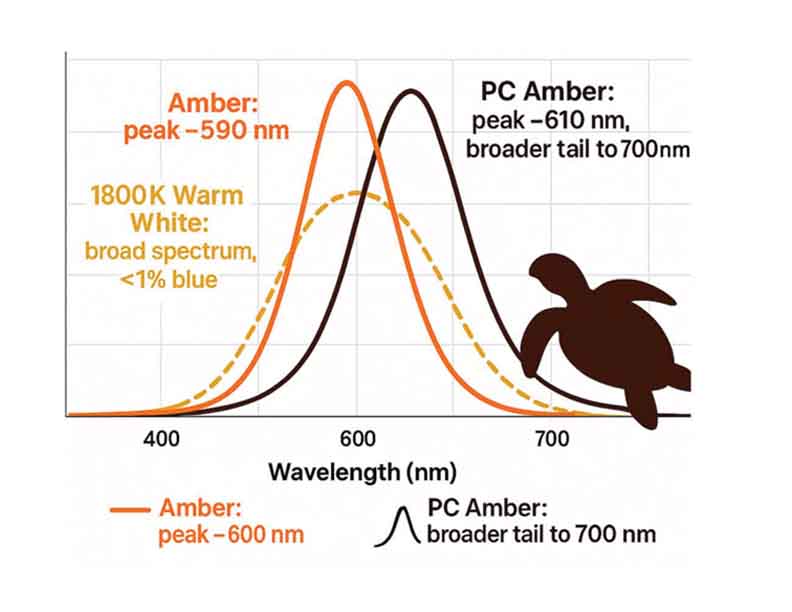
Sea turtles are expected to follow the stars and reach the sea as soon as they are born instead their heading towards dominant city lights and become the target of hunters.
Turtle-friendly lighting design utilizes long-wavelength light sources like PC 1800K (resembles candlelight in colour) and amber LEDs to minimize disruption to sea turtles, particularly hatchlings. These lights, with their lower blue light content, are less likely to disorient turtles attempting to reach the ocean than traditional white light, which can confuse them.
Night Sky & Effect on Astronomy
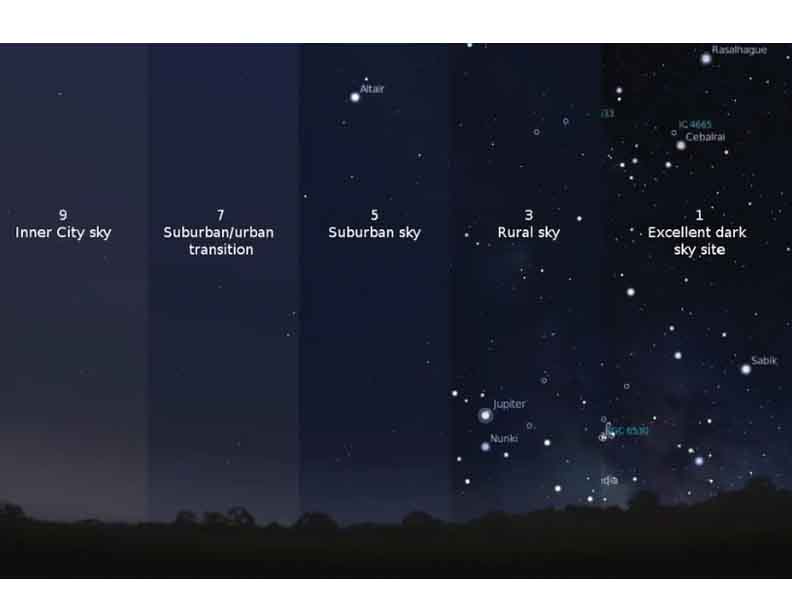
According to an article by National Geographic, more than 80% of the world’s population and about 99% of Americans and Europeans live under a sky glow — a form of light pollution and can barely see more than a handful of stars at night.
Due to light pollution, we actually cannot see so many objects like nebulae, planets and stars or the Milky Way itself. Astronomers are ringing alarm bells again and again about rising light pollution destroying pristine night skies.
Conclusion
- Sustainability point of view, LED systems for Road Lighting reduce energy consumption and carbon emissions. Considerations such as luminance, colour rendering index (CRI), CCT, glare control, flicker, mesopic vision illuminance, dark adaptation, blue light hazard, colour perception, fog penetration, and skyglow pollution are integral to determining the suitability of lighting for street applications. For Road Lighting “the right light, in the right place at the right time, controlled by the right system” is recommended.
- The Federal Highway Administration (FHWA), Lighting Europe, The International Dark-Sky Association, and similar International organisations world over recommends to choose the best CCT which involves trade-offs between light pollution, visual performance, personal preferences, ecological concerns, and economics. This should balance the needs of people with the needs of nature, based upon the predominant populations and activities.
- High CCT LED lighting should be avoided for street lighting due to its adverse effects, despite trade-offs in lighting design.
- While 3000K-4000K is a common recommendation, factors like specific roadway types (e.g., urban vs. rural), speed limits, and local environmental conditions may influence the optimal CCT for a particular application. 3000K (Warm White) has Moderate efficiency but creates a cosy ambiance, whereas 4000K (Neutral White) balances efficiency and clarity.
- Light source spectrum should be considered depending on the environmental requirements. This should balance the needs of people with the needs of nature, based upon the predominant populations and activities. This should also consider changes throughout time of night/year and luminaires with adaptable spectra and brightness. In a smart city project, dynamic street lights that adjust CCT from 4000K to 3000K based on time of night and the Lighting Level significantly enhanced both energy savings and public comfort. In India Cost will be the determing factor and should be applied where essential.
- IS 1944 Standard for Code of Practice for Road and Tunnel Lighting Second Revision when published and in use, I am hopeful, information in this article will be of use to designers and tendering authorities in deciding use of lower CCT in Road Lighting Applications.

Anil Valia is a Lighting Designer, Consultant & Educator B.E. Elect (Hons.), Chartered Engineer, MIE (India), FISLE, Emeritus MIES (USA), Educator – IALD (USA); Founder Fellow & Ex-Vice President ISLE, Founder LFM & Ex Vice President CEEAMA Course Director: International Lighting Academy